Western Digital
NVMe SSD
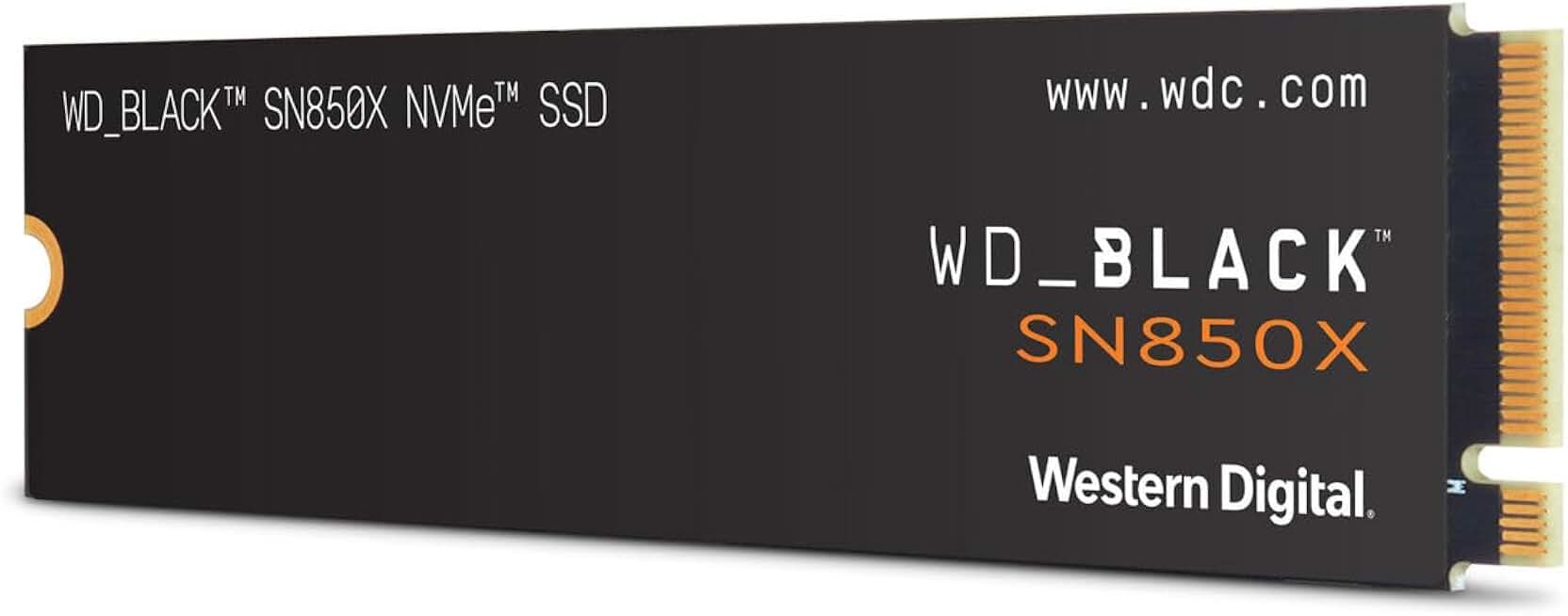
Western Digital WD_BLACK SN850X 4TB NVMe
4TB · NVMe · M.2
Available capacities:
Current Price
$679.99
All-Time Low
$229.95
Dec 2023
All-Time High
$843.00
Apr 2026
90-Day Average
$626.96
💰 Price per GB: $0.166/GB · near the segment median for NVMe SSD (median: $0.174/GB)
Price is elevated
Current price is 8% above the 90-day average. Consider waiting.
Price Analysis
The price has risen $90.00 (15%) in the past 30 days.
Price History
Price history data licensed from Keepa. Prices update every few hours.
Price history table28 periods
Recorded low, average and high for every period with data.
| Period | Low | Average | High | Days |
|---|---|---|---|---|
| 2022 | $374.99 | $497.89 | $699.99 | 22 |
| 2023 | $229.95 | $326.50 | $449.99 | 157 |
| 2024 | $259.99 | $303.90 | $339.88 | 152 |
| Sep 2024 | $300.43 | $308.07 | $309.99 | 19 |
| Oct 2024 | $277.99 | $305.60 | $309.99 | 18 |
| Nov 2024 | $249.99 | $290.02 | $309.99 | 17 |
| Dec 2024 | $259.99 | $292.04 | $299.99 | 14 |
| Jan 2025 | $276.72 | $287.16 | $295.03 | 22 |
| Feb 2025 | $278.12 | $283.14 | $289.99 | 18 |
| Mar 2025 | $279.00 | $284.39 | $289.99 | 8 |
| Apr 2025 | $279.95 | $284.73 | $289.99 | 8 |
| May 2025 | $279.99 | $287.70 | $299.99 | 22 |
| Jun 2025 | $277.01 | $286.37 | $299.99 | 23 |
| Jul 2025 | $279.49 | $289.41 | $299.99 | 19 |
| Aug 2025 | $269.99 | $283.50 | $289.99 | 15 |
| Sep 2025 | $255.00 | $263.38 | $264.99 | 10 |
| Oct 2025 | $256.87 | $275.26 | $309.99 | 14 |
| Nov 2025 | $299.99 | $329.37 | $349.99 | 13 |
| Dec 2025 | $336.99 | $404.52 | $479.99 | 14 |
| Jan 2026 | $349.00 | $498.01 | $599.99 | 25 |
| Feb 2026 | $549.99 | $624.14 | $743.13 | 15 |
| Mar 2026 | $589.00 | $652.26 | $699.99 | 18 |
| Apr 2026 | $668.00 | $757.30 | $843.00 | 15 |
| May 2026 | $599.99 | $629.50 | $659.00 | 2 |
| Jun 2026 | $599.99 | $629.27 | $679.00 | 11 |
| Jul 2026 | $598.00 | $611.86 | $659.00 | 28 |
| Aug 2026 | $589.99 | $624.83 | $649.99 | 31 |
| Sep 2026 | $649.99 | $662.61 | $679.99 | 13 |
Price milestones
Dated events from this product's own tracked history.
- First tracked
- August 3, 2022
- All-time low
- $229.95 on December 26, 2023
- All-time high
- $843.00 on April 4, 2026
- Biggest single-day drop
- $170.00 (31%) on November 26, 2022
- Longest stretch without a real move
- 87 days, February 15, 2025 to May 13, 2025
Compared with similar drives right now
Same capacity and specification, in stock, priced per gigabyte against this one.
| Product | Price | Per GB | vs this |
|---|---|---|---|
| Western Digital WD_Black SN850X 4TB NVMe No Heatsink | $679.00 | $0.166/GB | same |
| Silicon Power 4TB UD90 NVMe 4.0 Gen4 PCIe | $509.97 | $0.125/GB | -25% |
| Lexar 4TB NM790 PCIe Gen4 NVMe M.2 | $564.53 | $0.138/GB | -17% |
| Samsung 990 PRO 4TB NVMe | $1,079.99 | $0.264/GB | +59% |
| Acer Predator GM7 4TB : M.2 2280 PCIe NVMe | $702.99 | $0.172/GB | +3% |
Buy Now
| Retailer | Price | Availability | |
|---|---|---|---|
| Amazon | $679.99 | In Stock | View on Amazon → |
| Newegg | $679.99 | In Stock | View on Newegg → |
Prices may have changed at the retailers since our last check.
Get alerted when the price drops
Set your target price and we'll email you the moment this product hits it. No account required.
Almost there. Check your email to confirm your alert.
Specifications
- Type
- NVMe
- Capacity
- 4TB
- Form Factor
- M.2
- Brand
- Western Digital
- Part number
- WDS400T2X0E
Specs explained3 terms
Only the specifications this product actually carries.
- NVMe
- NVMe (Non-Volatile Memory Express) is the protocol modern SSDs use to talk to the system over PCIe, replacing the older AHCI protocol designed for spinning disks. NVMe drives, almost always in the M.2 form factor, are several times faster than SATA SSDs in sequential transfers and much faster at handling many simultaneous requests. NVMe has become the default for new builds, and its price per gigabyte now overlaps with SATA on many capacities.
- M.2 2280
- M.2 is the compact card form factor for SSDs that plugs directly into a motherboard slot, and 2280 describes the dimensions: 22mm wide and 80mm long, the most common size for desktops and laptops. Other lengths exist, notably 2230 for handhelds like the Steam Deck. An M.2 slot may carry NVMe, SATA, or both, and a drive must match what the slot supports.
- Sequential read and write speeds
- The headline speeds on an SSD listing, such as 7,450 MB/s read, describe large sequential transfers under ideal conditions. They are the numbers that separate PCIe generations, and they are the least representative of everyday use, where small random reads dominate and most modern drives feel similar. Two drives with different headline speeds but the same generation and NAND type usually perform indistinguishably for gaming and desktop work.